Ecuador
Accessible Ecuador: Quito, Middle of the World and Galápagos
Description
An accessible 9-day journey through Ecuador: Quito, the Middle of the World and the Galápagos Islands. Start in Quito, the first city declared a World Heritage Site, with a tour of its colonial center and a visit to the equator line, where you can stand with one foot in each hemisphere. Then fly to the Galápagos to see the giant tortoises of Santa Cruz, the Charles Darwin Research Station, and the beaches and wetlands of Isabela, with sea lions, iguanas and flamingos. Adapted transfers, hotels with accessible rooms and guides who accompany you every step of the way.
Available add-ons
You can add them when booking with Book Now.
Itinerary
Day 1Welcome to Quito
Welcome to Ecuador. On arrival at Quito airport, our team will meet you and take you to your hotel in the north of the city, the flattest and most modern area, in an adapted vehicle. The rest of the day is free to rest and acclimatize to the altitude (2,850 m).
Day 2Colonial Quito
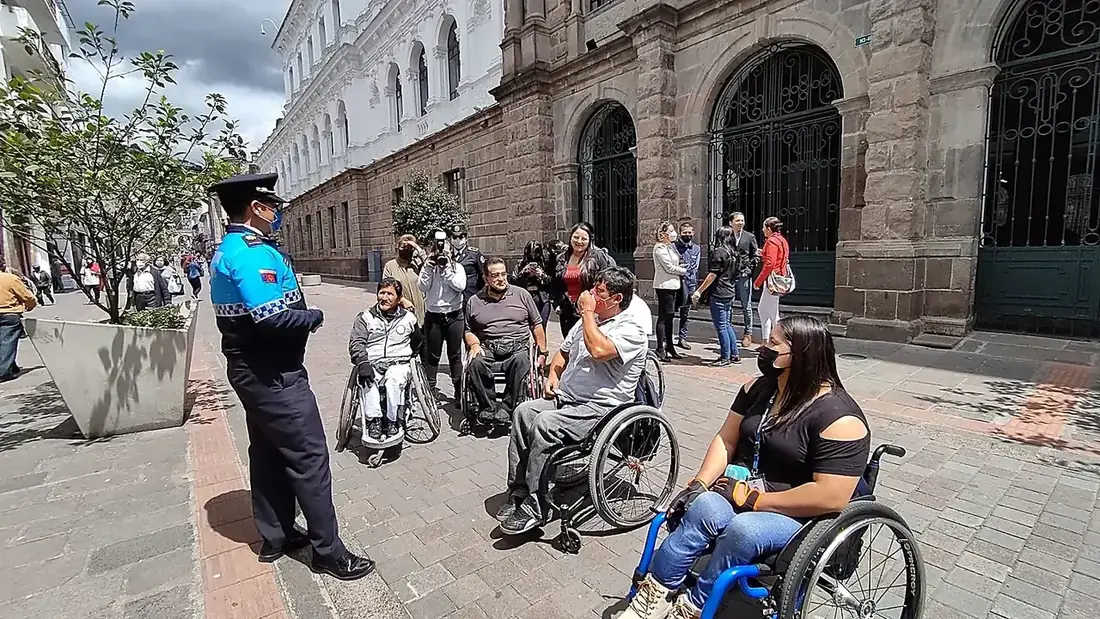
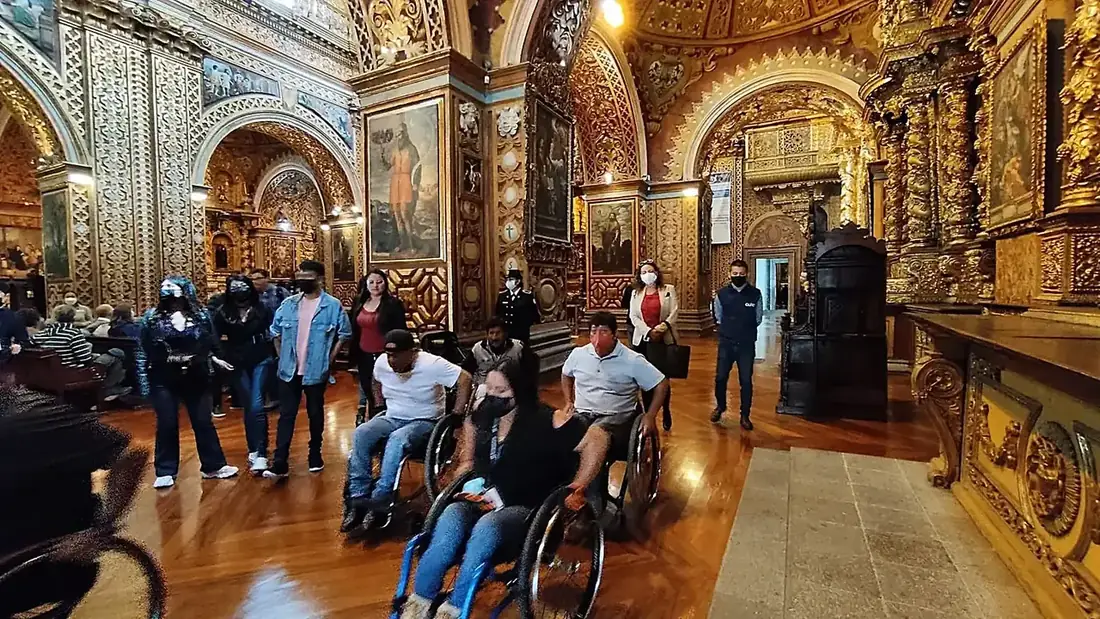
A tour of Quito's Historic Center, a World Heritage Site: Plaza Grande with the Carondelet Palace and the Cathedral, the Church of San Francisco, and views of the Basilica of the National Vow. ♿ The center's streets have cobblestones and slopes, so the tour combines stretches in an adapted vehicle with the points that have ramps and accessible entrances. Vehicle ascent to the El Panecillo lookout. Free afternoon.
Day 3Middle of the World
A visit to the Ciudad Mitad del Mundo, about 45 minutes from Quito, where the monument to the equator stands. Photos with one foot in each hemisphere, museums and squares in the complex, whose main areas are accessible. Return to Quito and a free afternoon to prepare for the trip to the Galápagos.
Day 4Flight to the Galápagos – Santa Cruz
Adapted transfer to the airport for your flight to Baltra (flight not included). Reception in the Galápagos, transfer and crossing of the Itabaca Channel to Santa Cruz Island, arriving in Puerto Ayora. Check-in at the hotel and free time to stroll along the waterfront.
Day 5Giant tortoises and Charles Darwin
Excursion to the highlands of Santa Cruz: the Los Gemelos craters and a giant tortoise ranch, where you will see them roaming freely. Lunch in the highlands. In the afternoon, a visit to the Charles Darwin Research Station, with paved paths, to learn about its conservation programs.
Day 6Crossing to Isabela
Ferry to Isabela Island, with boarding assistance. Arrival in Puerto Villamil, check-in, and a visit to the tortoise breeding center and the wetlands, where flamingos are often seen. Free time to enjoy the town and its beach.
Day 7Tintoreras and a free afternoon
Excursion to Tintoreras, a small islet off Puerto Villamil with marine iguanas, sea lions and reef sharks. Optional snorkeling depending on sea conditions. Lunch at a local restaurant and a free afternoon.
Day 8Return to Santa Cruz and bay tour
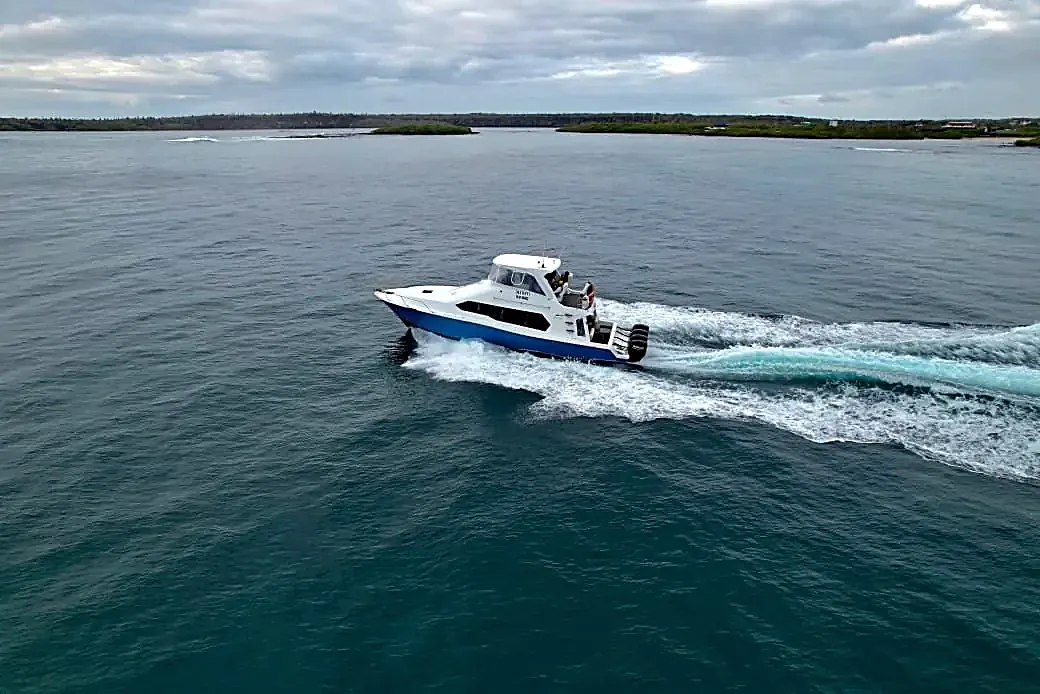
Ferry back to Santa Cruz. In the afternoon, a bay tour along the coast, with wildlife watching and optional snorkeling.
Day 9Time to say goodbye...
Transfer to Baltra with the crossing of the Itabaca Channel and flight to Quito (flight not included), with a connection to your international flight. After 9 days among volcanoes, the equator line and the unique wildlife of the Galápagos, you will take Ecuador in your heart. Thank you for traveling with us, and see you at the next accessible destination!
Includes
- Accessible hotels (8 nights with breakfast: 3 in Quito, 5 in the Galápagos)
- 2 lunches in the Galápagos
- Airport–hotel–airport transfers in Quito (adapted vehicle)
- Transfers in the Galápagos, Itabaca Channel crossing, 2 ferries and water taxis
- Bilingual tour guides (Spanish - English)
- All tours described in the itinerary
- Entrance fees to the Middle of the World City and the visits described, and Isabela municipal fee
- Basic snorkeling gear
- 24/7 traveler assistance at destination
Not included
- International flights from your country to Ecuador
- Flight Quito – Baltra – Quito
- Galápagos National Park fee (US$ 200; US$ 100 for Andean Community and Mercosur) and Transit Control Card (US$ 20), paid in cash on arrival
- Travel insurance
- Dinners, tips, meals not mentioned in the description, alcoholic and non-alcoholic drinks, other services
Frequently asked questions
1. Personal experience and assistance
Will my companion have to push or carry my wheelchair during the tours?
No, they will not have to do it alone. On every transfer and excursion a guide accompanies you and, where the route requires it, support staff from our local operator. We choose routes with flat paths, ramps or elevators so your companion can enjoy the trip as a traveler and not as a caregiver. On the Galápagos ferries and water taxis, boarding is done with the help of our staff.
Will the pace be exhausting for me or too slow for my companion?
We balance every day: one main activity per day, free time, and schedules that respect your rest, hygiene and transfer times, without giving up the key sights. There are free afternoons, and the first day is for rest to acclimatize to Quito's altitude.
Does the staff speak English and are they trained in mobility assistance?
Yes. All programs include bilingual guides (English and Spanish). We work with local operators experienced with travelers with reduced mobility, and Accessible Travel Peru, with more than 12 years of experience in accessible tourism, coordinates and supervises every detail of your trip.
2. Transport, flights and your own equipment
Can I bring my own wheelchair (electric or manual) and what happens on domestic flights?
Yes, you can travel with your own equipment. When you book, we will ask for the measurements, weight and technical specifications (such as the battery type for powered chairs) to coordinate with the airlines and secure safe transport in the hold. We also arrange airport assistance on arrival and at your connections. This program includes one domestic flight (Quito – Baltra – Quito).
How do we get between cities and attractions?
In Quito, in a private adapted vehicle. In the Galápagos, in local vehicles, ferries and water taxis with staff assistance: the ferries have no ramp, so boarding is assisted.
Is it easy to get an accessible taxi on the street on my own?
Not with regular service. In Ecuador, street taxis and standard ride-hailing apps rarely have a ramp or space for wheelchairs without folding them. That is why all transfers in the program are private and adapted. If you want to go out for dinner or a walk during your free afternoons, we can arrange adapted transport for you.
What if my wheelchair breaks down during the trip?
We coordinate with our local operator for an immediate solution: a replacement chair and contact with the city's technical services, so your itinerary does not stop.
3. Accessibility at monuments, hotels and bathrooms
How accessible is the Galápagos for someone in a wheelchair?
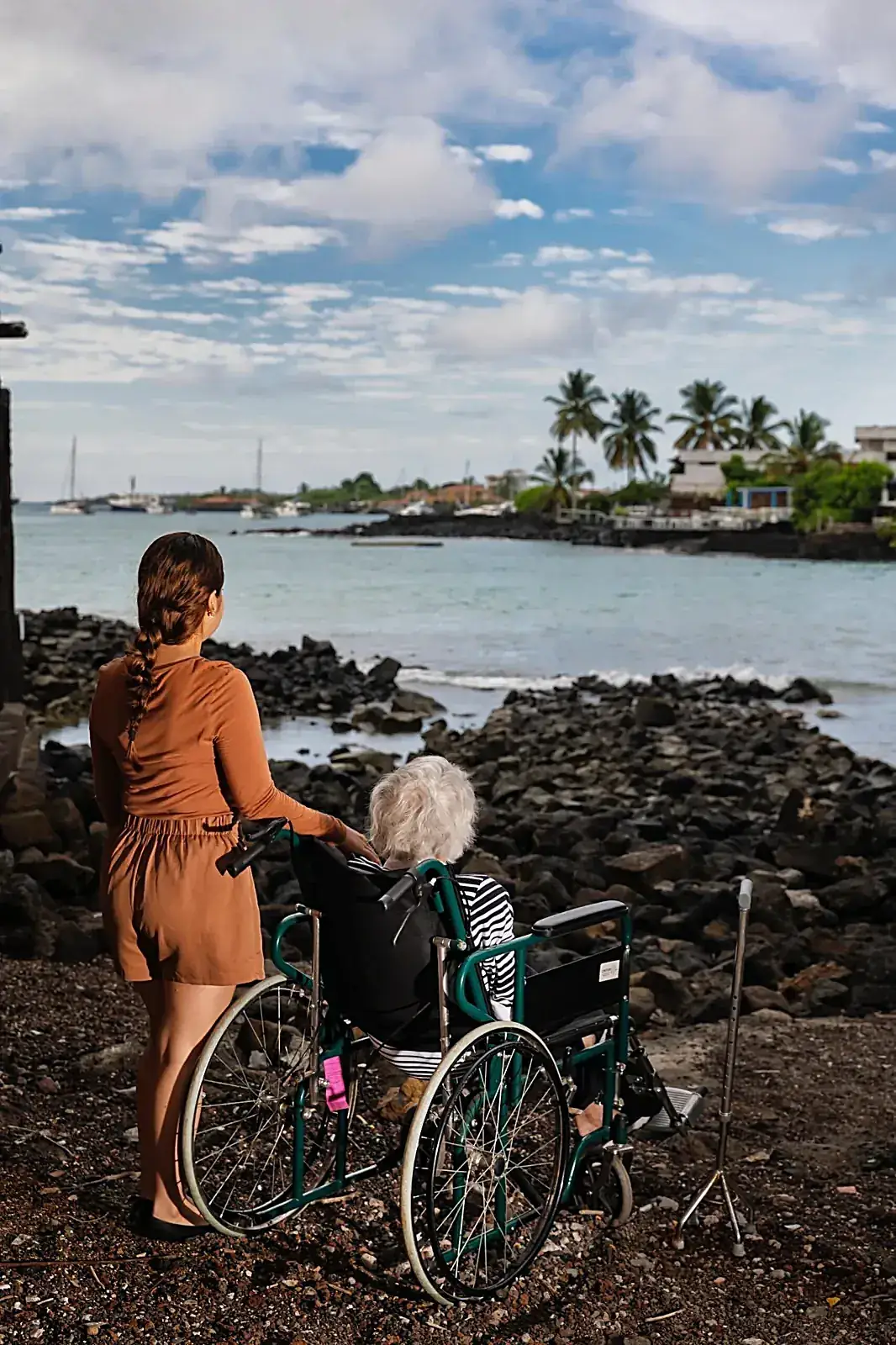
Partly accessible, and we prefer to say so clearly. Puerto Ayora and Puerto Villamil are small, flat towns, the Charles Darwin Station has paved paths, and the giant tortoises at the ranch are seen up close. Some sites, such as the lava tunnels, have stairs or uneven ground; in those cases we offer an alternative. Snorkeling is optional and depends on your condition and the sea.
And Quito and the Middle of the World?
The historic center of Quito has cobblestones and steep streets, so we use the adapted vehicle between points and visit places with ramps. The main areas of the Middle of the World City are accessible.
Will I have access to adapted bathrooms during long journeys and tours?
Yes. It is one of our priorities. On full-day excursions we plan stops at places with accessible restrooms (wide doors, grab bars and step-free access).
What kind of hotel rooms do you select?
We do not book standard rooms; we book adapted ones: step-free or elevator entrance, wide doors, beds at a height suitable for transfers, and a bathroom with a roll-in shower and safety bars. In the Galápagos, hotels are small: we confirm the features of each room before booking.
4. Health, climate and altitude
Will Quito's altitude affect me?
Quito is at 2,850 m. That is why the first day is free for rest. The Galápagos are at sea level. If you have a heart or respiratory condition, consult your doctor before traveling.
What is the climate in Ecuador and what should we pack?
Quito: mild during the day (around 20 °C) and cold at night. Dress in layers and bring a jacket. Galápagos: from December to May it is warm with calmer seas; from June to November it is cooler, with drizzle and rougher seas. Bring sunscreen, a cap and a poncho for the ferries.
Do I need a visa or other documents?
Most nationalities from the Americas and Europe do not need a visa for tourism in Ecuador. For the Galápagos, the National Park fee and the Transit Control Card are paid in cash. We can help you check according to your passport.
5. Money, electricity and connectivity
What currency is used in Ecuador and is it easy to pay by credit card?
Ecuador uses the US dollar. Cards are accepted at hotels and restaurants; in the Galápagos, carry cash for the entrance fees.
What plug type and voltage are used in Ecuador?
The voltage is 120V with type A and B plugs, as in the United States. Most modern chargers for phones, laptops and wheelchairs are dual voltage (110V–240V); check the label on your charger.
Is there good internet and Wi-Fi coverage?
In Quito, Wi-Fi in hotels and good 4G signal. In the Galápagos the connection is slower and intermittent.
Can you provide a local SIM card or eSIM when I arrive?
Yes. We can help you activate a data eSIM before the trip, or arrange a local SIM card for your arrival.

Shall we talk about your trip?
Write to us or book with WeTravel
Tell us your dates and accessibility needs and we will reply with a proposal.
Reviews
Travelers recommend us
Read what travelers who already went with us say, on WeTravel and TripAdvisor.