Brazil
Accessible Brazil: Rio de Janeiro and the Iguazú Falls
Description
An accessible 8-day journey through Brazil: Rio de Janeiro and the Iguazú Falls. Experience the "Marvelous City" on a trip designed for wheelchair users and their companions. Ride the historic Corcovado train up to Christ the Redeemer, enjoy the Guanabara Bay from Sugarloaf Mountain on an accessible cable car, and stroll the beaches of Copacabana and Ipanema. Then fly to Foz do Iguaçu to see the Brazilian side of the Falls, with its panoramic elevator that takes you straight to the Devil's Throat walkway, the Bird Park with adapted trails, and the giant Itaipú Dam. Private adapted vehicles, hotels with accessible rooms and guides who accompany you every step of the way.
Available add-ons
You can add them when booking with Book Now.
Itinerary
Day 1Welcome to Rio de Janeiro
Welcome to the Marvelous City. On arrival at Rio airport, our team will meet you and take you to your hotel in the Copacabana area in an adapted vehicle. The rest of the day is free to enjoy the seafront promenade, wide and flat, facing the ocean.
Day 2Christ the Redeemer and Rio's beaches
We will go up to Christ the Redeemer on the traditional Corcovado Train, through the Tijuca Forest. From the station, elevators and special equipment operated by trained staff take you to the lookout at the foot of the monument, with one of the most famous views in the world. In the afternoon, a scenic tour of Rodrigo de Freitas Lagoon and the beaches of Ipanema and Leblon. ♿ Adapted transport and assistance throughout the day.
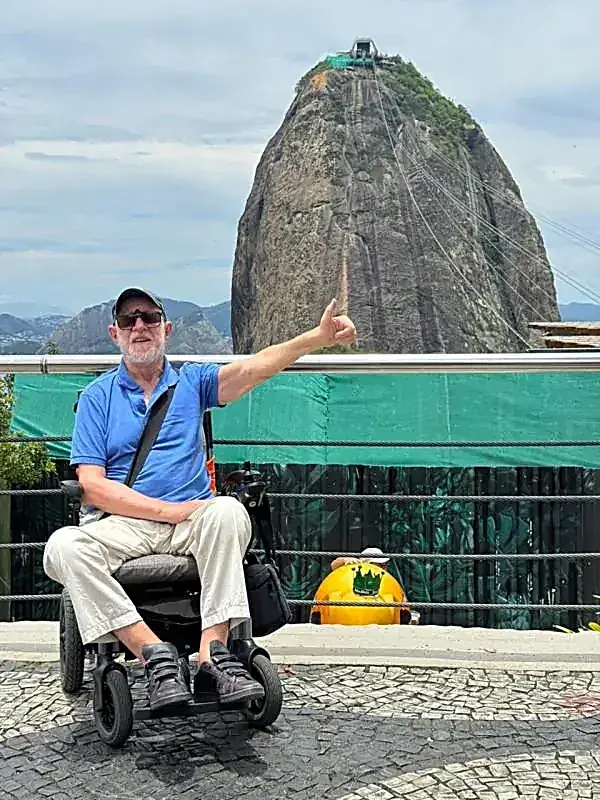
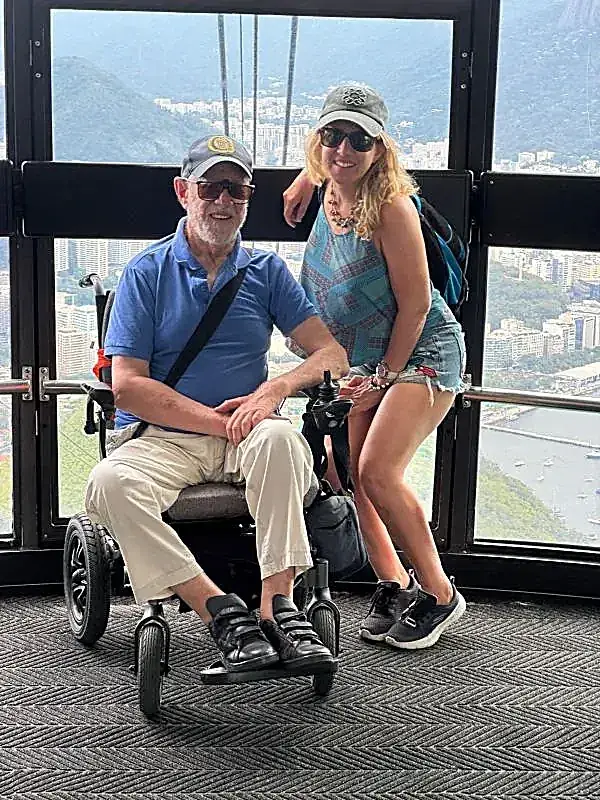
Day 3Sugarloaf Mountain and downtown Rio
In the morning, ride the fully accessible cable car up Sugarloaf Mountain, with ramps, elevators and adapted restrooms at Morro da Urca and at the summit. Enjoy views of Guanabara Bay, Copacabana and Christ in the distance. In the afternoon, visit the renovated downtown: the Museum of Tomorrow and the Olympic Boulevard, wide and flat, ideal for wheelchair users.
Day 4Botanical Garden and free afternoon
A green morning at the Rio Botanical Garden, with paved paths among royal palms and orchids. Free afternoon to rest, enjoy the beach or explore Copacabana at your own pace.
Day 5Flight to Foz do Iguaçu and the Bird Park
Adapted transfer to the airport for your flight to Foz do Iguaçu (flight not included). On arrival we will meet you with an adapted vehicle. In the afternoon, visit the Bird Park, with adapted trails that cross immersion aviaries with toucans, macaws and flamingos. Transfer to your hotel.
Day 6Iguazú Falls, Brazilian side, and Itaipú
Today you will see one of the Seven Natural Wonders of the World. From the Brazilian side you get the full panoramic view of the falls. The panoramic elevator takes you straight to the Devil's Throat walkway, where you feel the power of the water up close. In the afternoon, a panoramic visit to the Itaipú Dam, one of the largest hydroelectric plants in the world, with elevators throughout the route.
Day 7Free day in Foz do Iguaçu
A day to rest or take the optional excursion to the Argentine side of the Falls, with accessible walkways to the Devil's Throat ($235 per person).
Day 8Time to say goodbye...
At the scheduled time, adapted transfer to Foz do Iguaçu airport. After 8 days among the Christ statue, the Carioca sea and the power of the Falls, you will take Brazil in your heart. Thank you for traveling with us, and see you at the next accessible destination!
Includes
- Accessible hotels (adapted rooms, 7 nights with breakfast)
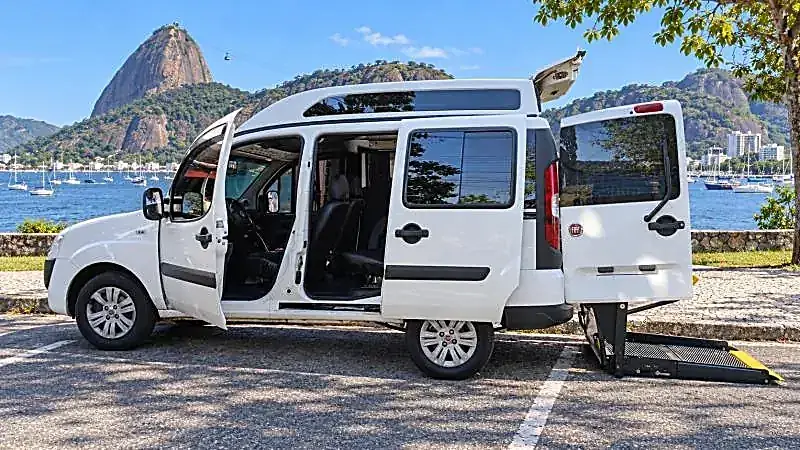
- Airport–hotel–airport transfers (adapted vehicles in all destinations)
- Bilingual tour guides (Spanish - English)
- All tours described in the itinerary
- Corcovado train and entrance to Christ the Redeemer
- Sugarloaf Mountain cable car
- Entrance to the Museum of Tomorrow, Botanical Garden, Bird Park, Iguaçu National Park and Itaipú Panoramic
- 24/7 traveler assistance at destination
Not included
- International flights from your country to Brazil
- Domestic flight Rio de Janeiro – Foz do Iguaçu
- Travel insurance
- Electronic visa (e-Visa), if your nationality requires it
- Tips, meals not mentioned in the description, alcoholic and non-alcoholic drinks, other services
Frequently asked questions
1. Personal experience and assistance
Will my companion have to push or carry my wheelchair during the tours?
No, they will not have to do it alone. On every transfer and excursion a guide accompanies you and, where the route requires it, support staff from our local operator. We choose routes with flat paths, ramps or elevators so your companion can enjoy the trip as a traveler and not as a caregiver. The main attractions have ramps, elevators and adapted restrooms.
Will the pace be exhausting for me or too slow for my companion?
We balance every day: one main activity per day, free time, and schedules that respect your rest, hygiene and transfer times, without giving up the key sights. There is one main activity per day, free afternoons and a free day in Foz do Iguaçu.
Does the staff speak English and are they trained in mobility assistance?
Yes. All programs include bilingual guides (English and Spanish). We work with local operators experienced with travelers with reduced mobility, and Accessible Travel Peru, with more than 12 years of experience in accessible tourism, coordinates and supervises every detail of your trip.
2. Transport, flights and your own equipment
Can I bring my own wheelchair (electric or manual) and what happens on domestic flights?
Yes, you can travel with your own equipment. When you book, we will ask for the measurements, weight and technical specifications (such as the battery type for powered chairs) to coordinate with the airlines and secure safe transport in the hold. We also arrange airport assistance on arrival and at your connections. This program includes one domestic flight (Rio de Janeiro – Foz do Iguaçu).
How do we get between cities and attractions?
Always in private adapted vehicles with a ramp or elevator, in Rio and in Foz do Iguaçu. Between cities we fly, with assistance at every airport.
Is it easy to get an accessible taxi on the street on my own?
Not with regular service. In Brazil, street taxis and standard ride-hailing apps rarely have a ramp or space for wheelchairs without folding them. That is why all transfers in the program are private and adapted. If you want to go out for dinner or a walk during your free afternoons, we can arrange adapted transport for you.
What if my wheelchair breaks down during the trip?
We coordinate with our local operator for an immediate solution: a replacement chair and contact with the city's technical services, so your itinerary does not stop.
3. Accessibility at monuments, hotels and bathrooms
What is the visit to Christ the Redeemer really like in a wheelchair?
Christ the Redeemer is under renovation until May 2027 (new inclined elevators). In the meantime, you ride the train and elevators up to the second level, and from there staff-operated stair-lift equipment takes you up the 80 steps to the lookout. It does not operate in the rain, accepts standard manual wheelchairs (with a powered chair you must transfer to a park chair), and has weight limits of 150 kg for the vehicle and 130 kg for the chair. That is why we schedule the visit flexibly according to the weather.
Are Sugarloaf and the Falls accessible?
Yes. The Sugarloaf cable car has ramps, elevators and adapted restrooms. At the Falls, the panoramic elevator gives direct access to the Devil's Throat walkway; on the walkway you will get wet, so we give you a rain poncho.
Will I have access to adapted bathrooms during long journeys and tours?
Yes. It is one of our priorities. On full-day excursions we plan stops at places with accessible restrooms (wide doors, grab bars and step-free access).
What kind of hotel rooms do you select?
We do not book standard rooms; we book adapted ones: step-free or elevator entrance, wide doors, beds at a height suitable for transfers, and a bathroom with a roll-in shower and safety bars.
4. Health, climate and documents
What is the climate in Brazil and what should we pack?
Rio de Janeiro: warm and humid almost all year; in summer (December to March) it exceeds 30 °C. Light clothing, sunscreen and a cap. Foz do Iguaçu: hot in summer and cool in winter (June to August). Bring a rain poncho because of the spray from the falls.
Do I need a visa or other documents?
It depends on your nationality. Since April 2025, citizens of the United States, Canada and Australia need an electronic visa (e-Visa), which is processed online before the trip. Most South American countries and European Union countries do not need one for tourism. We can help you check when you book.
5. Money, electricity and connectivity
What currency is used in Brazil and is it easy to pay by credit card?
The official currency is the Brazilian real (BRL). International cards are widely accepted.
What plug type and voltage are used in Brazil?
The voltage is 127V in Rio and Foz (some hotels have 220V outlets), with type N and C plugs. Bring an adapter. Most modern chargers for phones, laptops and wheelchairs are dual voltage (110V–240V); check the label on your charger.
Is there good internet and Wi-Fi coverage?
Yes. There is Wi-Fi in hotels and good 4G signal in both cities.
Can you provide a local SIM card or eSIM when I arrive?
Yes. We can help you activate a data eSIM before the trip, or arrange a local SIM card for your arrival.

Shall we talk about your trip?
Write to us or book with WeTravel
Tell us your dates and accessibility needs and we will reply with a proposal.
Reviews
Travelers recommend us
Read what travelers who already went with us say, on WeTravel and TripAdvisor.